
KAZUYA TANABE
At the intersection of cinema and fashion, Kazuya Tanabe has built a striking and singular presence. From his performance in YOROÏ with French rapper Orelsan, to the introspective intensity of BAKA’S IDENTITY on Netflix, his work explores identity, strength, and emotional depth.
Recently chosen as a model for the new Versace campaign, Kazuya moves effortlessly between screen and image. In this interview, he reflects on vulnerability, time, and what remains unspoken.
Words by Charles Vane, photographs by Allan Abani.
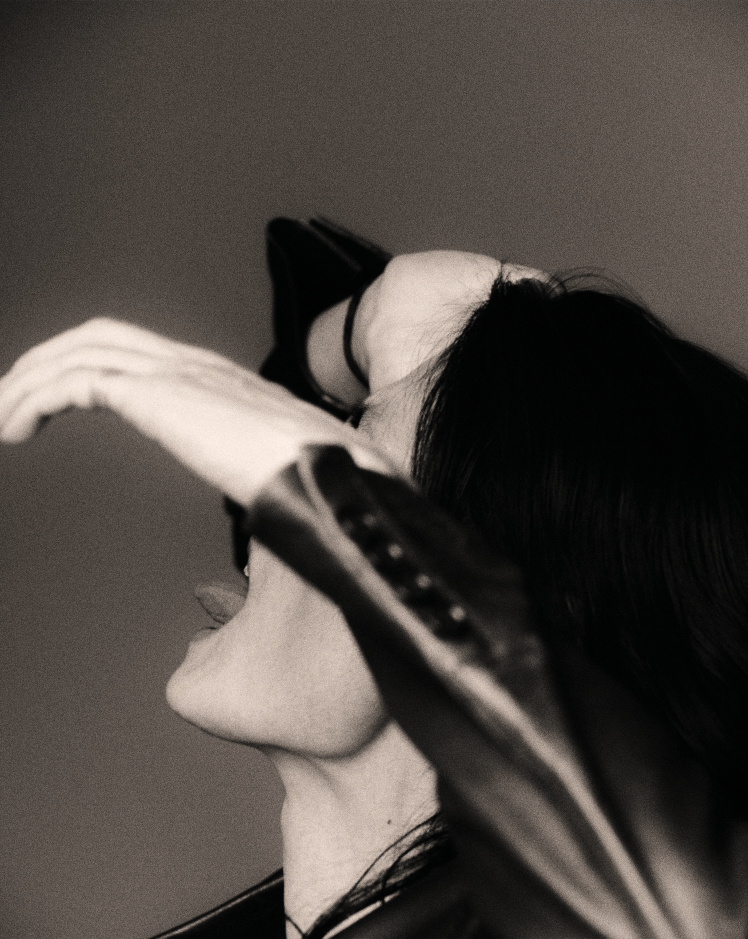
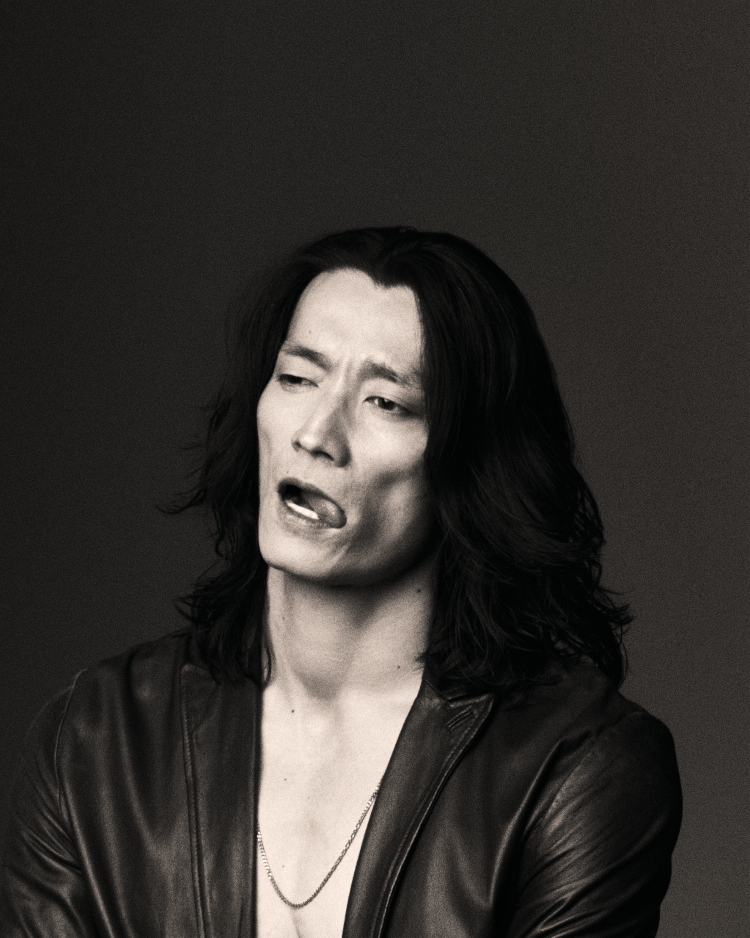
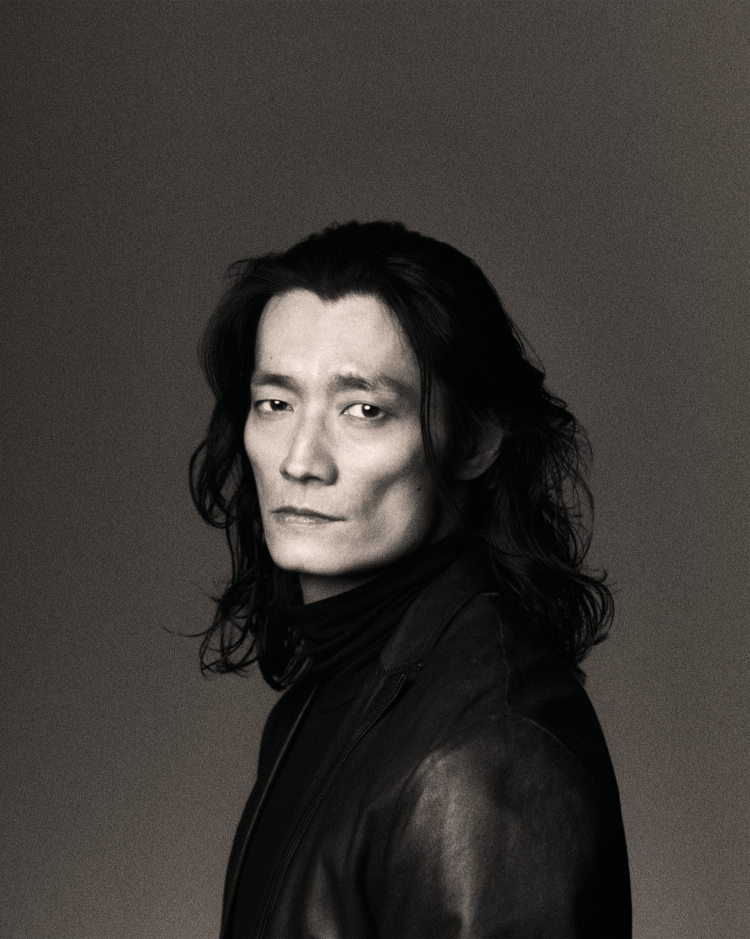
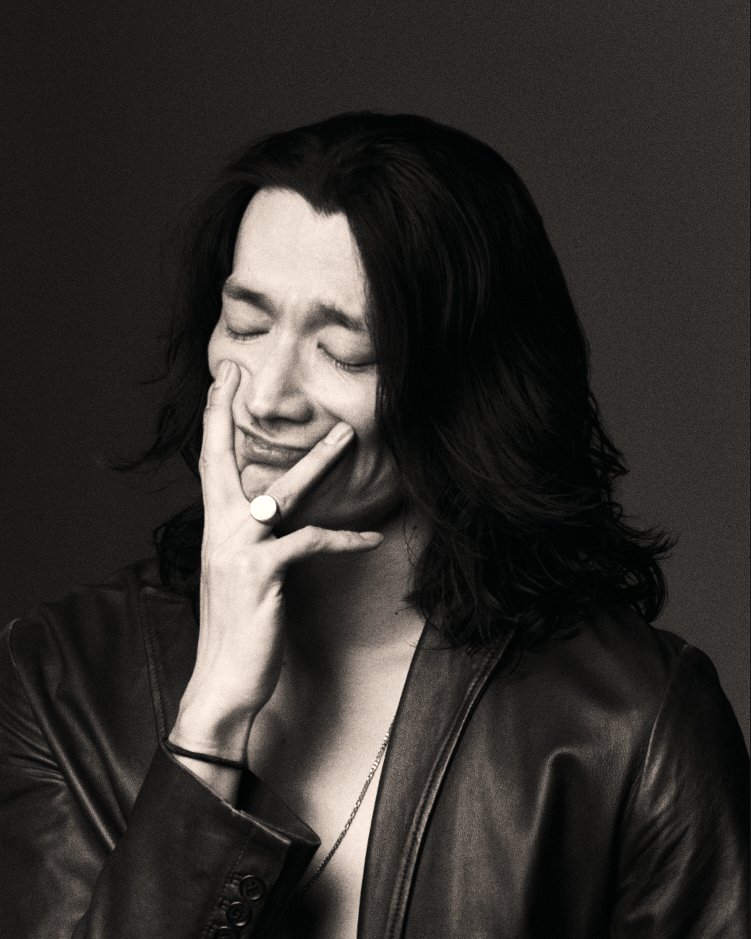
These photos were shot live by Allan Abani on his IRL PHOTOSHOOT, capturing the conversation and the portraits in the same raw, unfiltered moment.
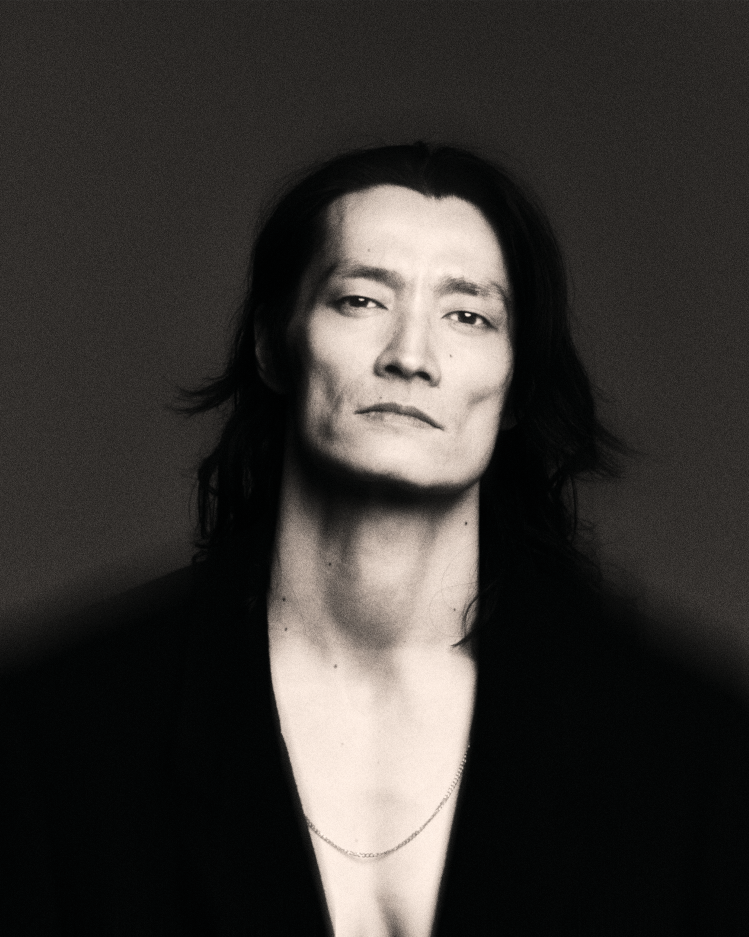
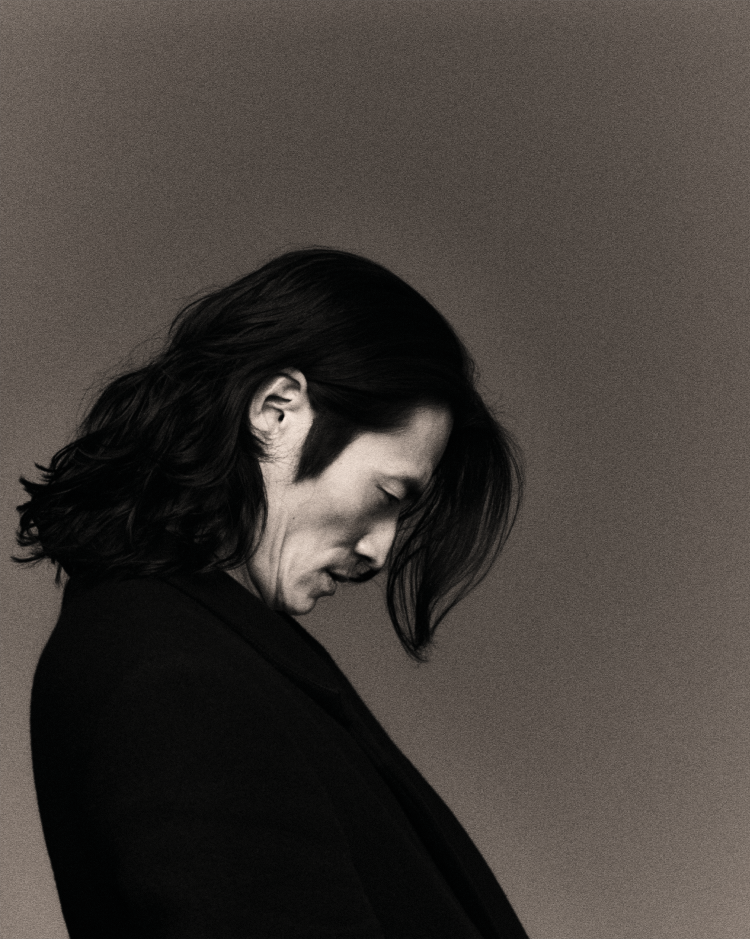
Tell us about yourself. Where do you come from and what made you want to become an actor?
I grew up in Yokohama, Kanagawa. Rather than wanting to become an actor, I think I simply wanted to be an “expressive person.”
As a child, I tried writing stories and drawing pictures. I loved films, but I originally entered this industry because I wanted to be a singer.
When I was 20, I saw a stage play for the first time and was deeply moved. That was when I thought, “I want to become an actor.” While exploring different forms of expression, acting simply happened to become my profession — nothing more than that. So my commitment to acting as a craft came later, naturally.
When you are alone, without a camera or an audience, what brings you back to yourself most often?
If I had to choose, it would be listening to Japanese music I used to hear when I was in elementary and middle school.
But because I always feel like I’m performing in some way within social life, simply being alone may already be the time when I return to myself. Recently, I’ve started to think that the version of myself that exists in front of others is, in fact, my true self. The “self” I imagine privately is something I can simply enjoy when I’m alone. Family, friends, partners, work — all of it happens in front of someone.
Do you feel that acting reveals you, or protects you?
In my mid-twenties, when I was studying Method acting in drama school, I believed acting was about exposing yourself. It was a very frightening process. Now, I feel it protects me.
Through acting, the experiences I’ve gained have given me individuality and identity. It has also given me a place to belong. Having “a place to belong” is extremely important. Acting made me who I am as an actor, and because of that, I am able to exist in society. In that sense, it protects me.
When I strongly felt that acting was about “exposing” myself, I don’t think I had accepted who I was as fully as I do now. In other words, there is something valuable in admitting how flawed or ridiculous you can be. Now, rather than exposing myself, it feels more like allowing myself to be seen. But even so, exposing yourself is still frightening.
What kind of pain or fragility do you find the hardest to express on screen?
To me, expression is simply something people watch and interpret in their own way. I don’t consciously focus on my own pain or fragility. If I experience that kind of struggle, it usually happens at home — alone — during preparation, wrestling with the material, sometimes even running my hands through my hair in frustration. Whatever happens inside me, I prefer to work through it on my own.
However, filmmaking is always collaborative. In that process, when something I genuinely believe is good — or something that naturally rises from within me — is rejected, and then you must communicate through that rejection, it involves pain.
Interestingly, projects where everything feels comfortable and free of conflict often don’t become the strongest works. I understand that pain and fragility are necessary in order to create something meaningful.
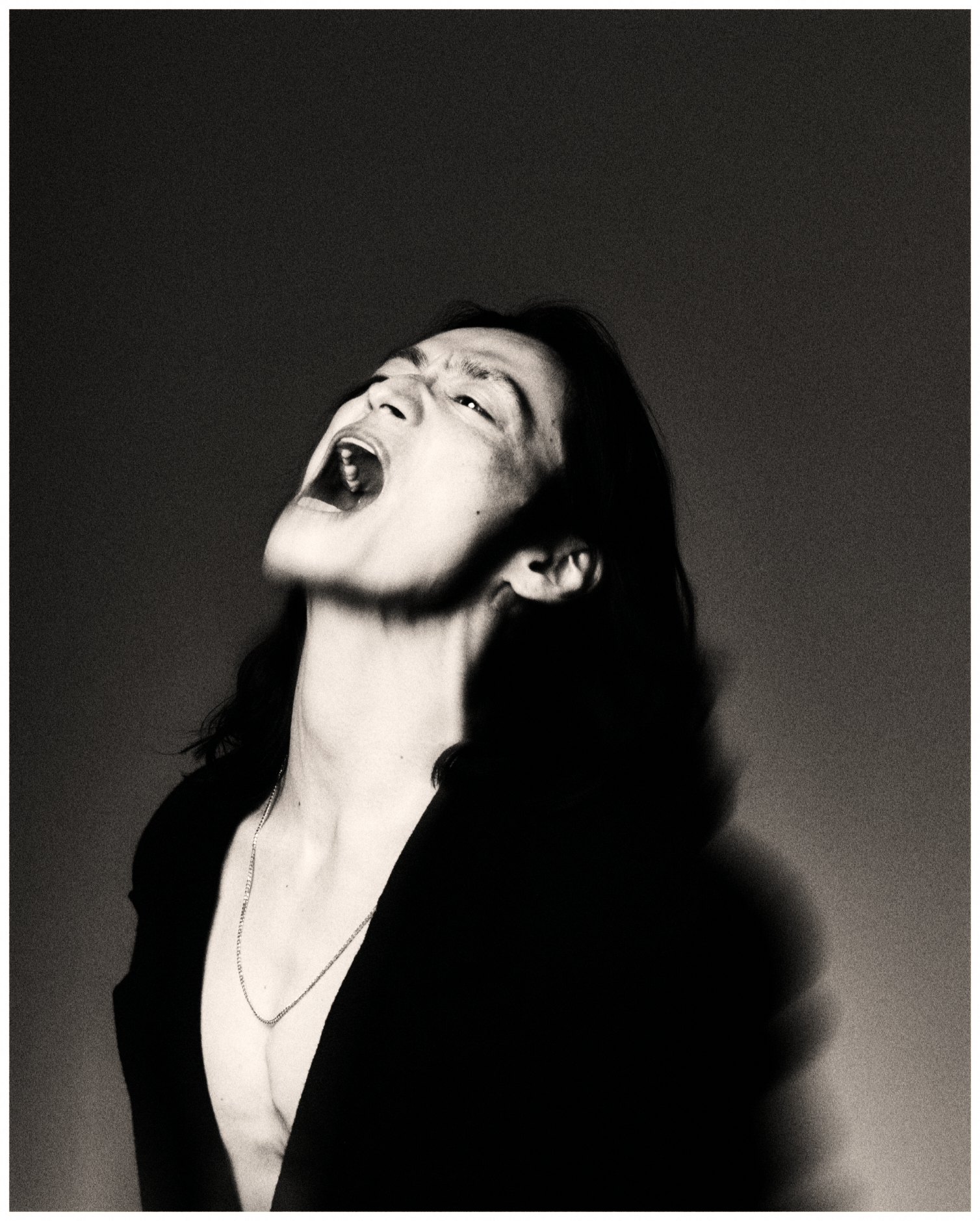
We recently saw you in ‘YOROÏ’. What were the differences between a French movie set and a Japanese movie set?
I didn’t feel any major differences. Including our director David, many French creators seem to have deep respect for Japanese film history and culture. In some ways, I felt there are similarities in national temperament as well. We communicated extensively throughout the process.
French cinema does not have the same financial scale as Hollywood productions, so efficiency becomes essential. In that sense, it is similar to the current working conditions in Japan. So I would describe it as somewhere between Hollywood and Japan.
Is there a scene you never truly left, even after the project was finished?
There isn’t one specific scene that comes to mind. If anything, everything remains. Just like in life, once you experience something, whether good or bad, you can never return to the values you had before that experience. All the roles I’ve played, and all the experiences I’ve had, have shaped who I am today — both as an actor and as a person.
Congratulations for being part of the Versace Spring/Summer 2026 campaign. How did you feel when you landed this project? Are there differences in the way you approach modeling and acting?
I’ve only been modeling for two years, so I don’t carry unnecessary pride about it. Rather than “challenging” it, I approach each job as a new experience.
Still photography is always difficult. As a model, there is no script and no character. In a way, it’s pure improvisation. I believe modeling, like acting, requires both technique and individuality — a point of view. I don’t yet have enough technical skill as a model, so for now, I rely on individuality.
I approach modeling as an actor. If someone is simply looking for technical precision to make the clothes look beautiful, I might honestly say, “Then I’m probably not your guy” haha.
Technique will come with time.
Are you ever afraid of exposing yourself too sincerely through a role?
Very much so. Facing yourself and exposing yourself is frightening — both in acting and in life.
In drama school, I went through many Method exercises. I was made to go through them, actually haha. The core of the fear is whether it will be accepted.
Fortunately, I also learned that people are often more accepting than we expect. We live in the age of social media, where criticism is highly visible and it’s easy to present an idealized version of oneself. In many ways, daily life itself shapes who we are. In the future, taking the risk of truly exposing oneself may become even more difficult. At the same time, I believe social media is a powerful tool that allows the weak to confront the powerful.
When you look at your work with distance, what moves you more: what you show, or what you leave unsaid?
Without question, what is left unsaid.
In people, in acting, in art — showing 20 to 30 percent is enough. Perhaps relationships are the same. What matters is preparing 120 percent. Preparation can be self-satisfaction. But the 20 to 30 percent you reveal is for the work, and for the other person.
If your acting were a trace left behind, what would you want it to tell?
If even one young person watches my performance and feels inspired to become an actor, I would be happy — just as I once was. Though at the same time, I would probably tell them, “You shouldn’t do it” haha.
I believe human beings are creatures who want to leave traces of their existence. No one is completely free from the desire for recognition.
Just as Toshiro Mifune still lives on through the screen, even if I die within a work, I can continue to live inside it. I’m grateful for that.
I’m not married, and I don’t have children. Perhaps until the day I have a child, this perspective won’t change.
What does the word “zero” mean to you?
The fear of losing everything. The relief of having nothing to carry. Pure curiosity, and a state in which the word “giving up” does not yet exist.
I am 40 years old. I can restart from one. But I can never truly start from zero again. In that sense, “zero” may be something I long for.